
Comparison between fiber optic and satellite internet services

Introduction
Choosing the right internet connection is a fundamental decision for students, small business owners, and remote workers. The quality of your connectivity directly impacts productivity, from attending online classes to conducting video conferences or managing digital transactions. While many options exist, fiber optic and satellite internet represent two vastly different approaches to delivering data to your location.
Understanding the technical and practical differences between these two services is essential for making an informed choice. Fiber optic technology relies on physical cables to transmit light pulses, whereas satellite internet utilizes radio waves sent to orbiting spacecraft. Selecting the appropriate service depends on your geographical location, your specific bandwidth needs, and your budget for hardware and monthly subscriptions.
Technical differences in data transmission
The primary distinction between these two services lies in how the signal travels from the provider to your device. Fiber optic internet uses thin strands of glass or plastic to transmit data as pulses of light. Because light travels at incredible speeds with minimal signal degradation, fiber provides the most stable and fastest connection currently available to consumers. It requires a physical infrastructure of cables laid underground or on utility poles to reach your premises.
Satellite internet, conversely, functions through a wireless link between a dish installed at your location and a satellite in orbit. When you request data, the signal travels from your dish up to the satellite, then down to a ground station, and finally back through the terrestrial network to your device. This process involves significant distances, which introduces inherent physical limitations regarding speed and responsiveness.
Speed and latency comparisons

Speed and latency are the two most critical metrics for determining internet quality. Speed refers to the volume of data that can be transferred per second (bandwidth), while latency, or "ping," refers to the time it takes for a signal to travel from your device to a server and back.
Fiber optic services typically offer much higher speeds and significantly lower latency. This makes fiber the superior choice for applications that require real-time interaction, such as online gaming, high-definition video conferencing, and live streaming. In a fiber network, the "lag" is almost imperceptible, providing a seamless digital experience.
Satellite internet generally suffers from higher latency due to the immense distance the signal must travel to space and back. Even with modern constellations of low-earth orbit satellites, there is often a noticeable delay. While some satellite providers offer impressive download speeds, the high latency can make real-time tasks like VoIP calls or competitive gaming difficult or frustrating.
Reliability and environmental impact
Environmental factors play a major role in the stability of your connection. Fiber optic cables are housed in protective casings and buried underground or attached to controlled structures, making them largely immune to weather conditions like heavy rain, wind, or storms. Once the physical infrastructure is in place, the connection remains highly consistent.
Satellite internet is more susceptible to atmospheric interference. Heavy cloud cover, intense rain, or snow can weaken the signal traveling between your dish and the satellite, a phenomenon often referred to as "rain fade." Furthermore, if your satellite dish's line of sight to the sky is obstructed by trees or buildings, the service may become unreliable or completely unavailable.
Availability and installation requirements
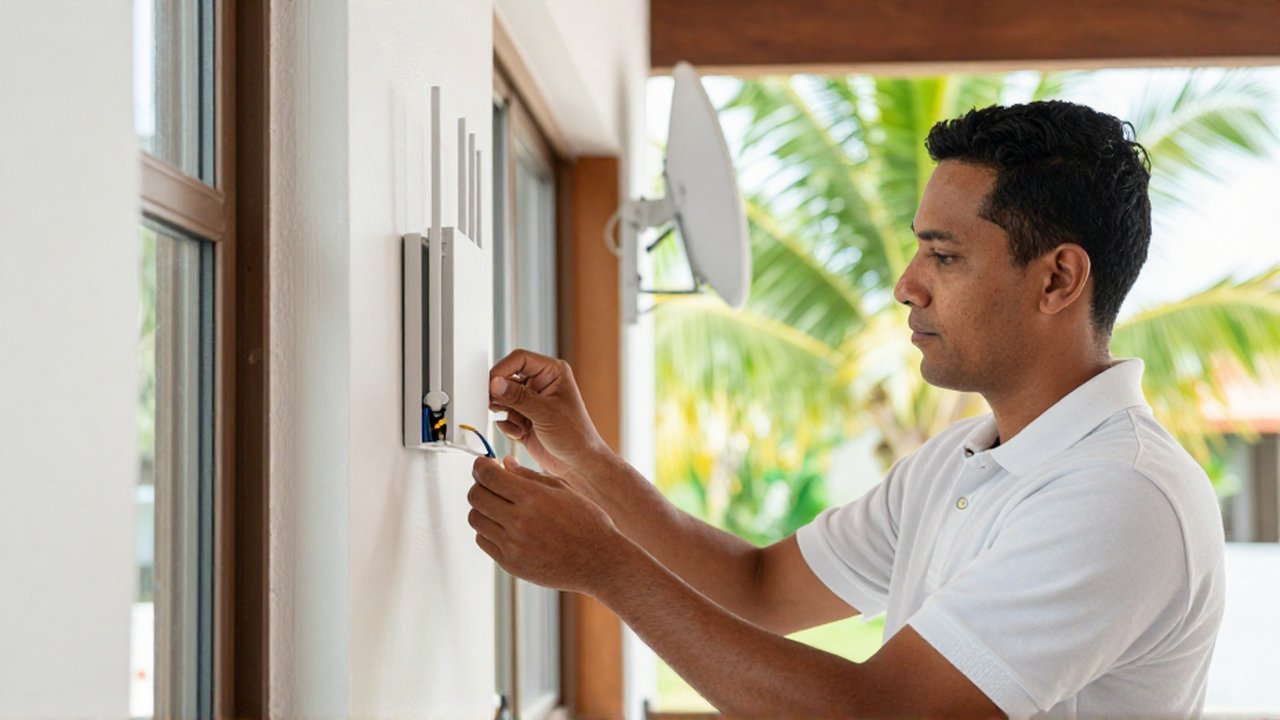
The availability of these services is often determined by your specific location. Fiber optic technology is highly efficient but expensive to deploy, meaning it is most commonly found in urban and suburban areas where many homes and businesses are concentrated. If you live in a densely populated city, fiber is likely an accessible option.
Satellite internet excels in providing connectivity to remote, rural, or geographically isolated areas where laying physical cables is physically impossible or economically unfeasible. If you live in a mountainous region or a countryside area far from city centers, satellite may be the only reliable way to access the internet. However, it requires the installation of a specialized dish on your property, which must be positioned with a clear view of the sky.
Summary of key features
| Feature | Fiber Optic | Satellite Internet |
|---|---|---|
| Primary Medium | Light through glass cables | Radio waves via satellite |
| Typical Speed | Very High | Moderate to High |
| Latency (Ping) | Extremely Low | High |
| Weather Stability | Very High | Moderate (subject to interference) |
| Best Use Case | Urban/Suburban; Gaming; Business | Rural/Remote; Basic Browsing |
Frequently asked questions
Which service is better for working from home? Fiber optic is generally better for remote work because its low latency and high stability ensure smooth video calls and reliable access to cloud-based professional tools.
Can satellite internet support multiple users at once? Yes, but performance may degrade more quickly than fiber as more devices are connected, due to the limited bandwidth and higher latency inherent in the technology.
Is fiber optic more expensive than satellite? While monthly costs vary by provider, fiber often offers better value in terms of speed per dollar. However, satellite may be more expensive in remote areas where there is a lack of competition.
Do I need special equipment for these services? Fiber requires an Optical Network Terminal (ONT) connected to your router, while satellite requires a specialized dish and a modem to communicate with the orbiting satellite.
Leave a Reply