Is fiber optic internet reliable for online student learning
Introduction
Online learning has transformed from a supplemental educational method into a primary necessity for students worldwide. To succeed in a digital classroom, students require a stable connection that can handle live video lectures, high-definition streaming, and the simultaneous uploading of large academic files. Without a dependable internet service, students face the frustration of dropped calls, lagging audio, and interrupted exams, which can severely impact their academic performance and mental well-being.
Fiber optic technology has emerged as the gold standard for high-speed connectivity. Unlike traditional copper-based systems, fiber uses light pulses to transmit data through glass strands, offering unparalleled speeds and stability. For students, this means a more seamless integration of digital tools, ranging from virtual reality simulations to real-time collaborative document editing. Understanding the advantages and specific use cases of fiber is essential for anyone looking to optimize their remote learning environment.
Advantages of fiber optic technology for students

Fiber optic internet provides several technical advantages that directly benefit the student experience. The most significant is symmetrical speeds, meaning the upload speed is often as fast as the download speed. In a typical home setting using cable or DSL, uploading a video assignment or participating in a high-quality video conference can be slow and laggy. Fiber eliminates this bottleneck, allowing for smooth, real-time interaction.
Another critical factor is low latency. Latency, or "ping," is the delay between sending a request and receiving a response. In online learning, high latency causes "lag" during live sessions, where a teacher's voice might take several seconds to reach the student, or a student's question might be cut off. Fiber optic cables are less susceptible to interference and provide much lower latency than older technologies, ensuring that digital conversations feel natural and instantaneous.
Furthermore, fiber is highly resilient to weather and electromagnetic interference. Because the signal travels via light rather than electricity, it is not affected by the electrical noise from household appliances or extreme weather conditions that often plague copper wiring. This reliability ensures that a student can count on their connection staying active during critical exam periods or late-night study sessions.
Comparing fiber with other connection types
When deciding on a connection for academic purposes, it is helpful to compare fiber against the most common alternatives:
| Feature | Fiber Optic | Cable (Coaxial) | DSL / Copper |
|---|---|---|---|
| Speed Consistency | Extremely High | Moderate | Low |
| Upload Speeds | Very High (Symmetrical) | Moderate to Low | Low |
| Latency (Lag) | Very Low | Moderate | High |
| Reliability | Exceptional | Good | Variable |
| Congestion Risk | Very Low | High during peak hours | High |
While cable internet is widely available and offers decent download speeds, it often suffers from "neighborhood congestion," where speeds drop during evening hours when everyone is online. For a student trying to submit an assignment at 8:00 PM, this can be a significant risk. Fiber maintains much more consistent performance regardless of how many neighbors are using the network.
Essential requirements for a stable learning environment

Simply having a fiber connection is sometimes not enough to guarantee a perfect learning experience. Students must also consider the internal setup of their home network to fully utilize the high-speed capacity of fiber.
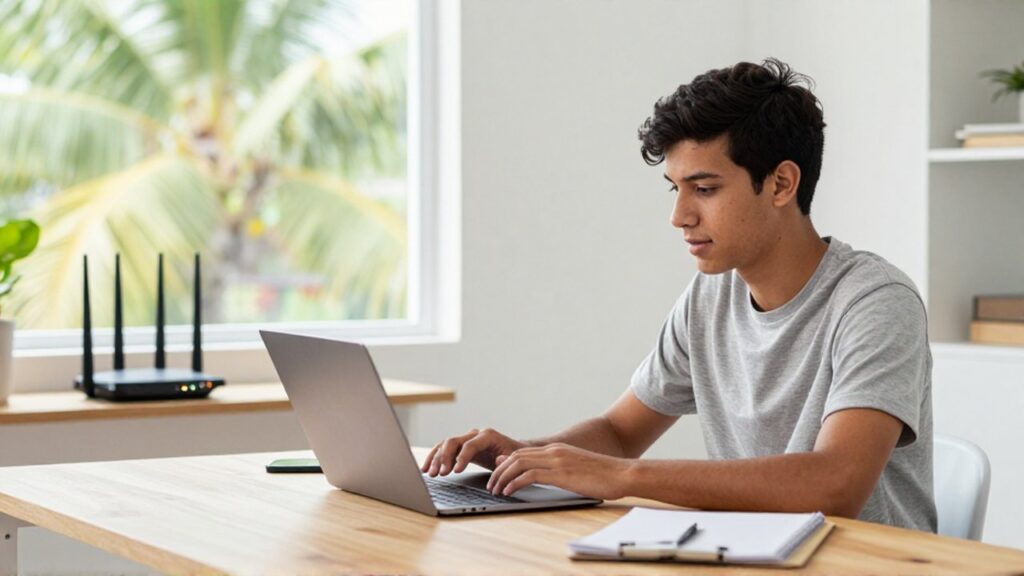
Hardware and Router Placement A high-speed fiber line requires a modern router capable of handling those speeds via Wi-Fi. If the router is placed in a distant room or behind thick walls, the "fiber advantage" is lost before it reaches the student's laptop. For the best results, students should use an Ethernet cable to connect their computer directly to the router during high-stakes activities like online exams.
Device Management In many modern households, multiple devices are connected to the internet simultaneously. Even with fiber, if several members of a household are streaming 4K video or playing intensive online games, it can impact the bandwidth available for a student's video lecture. Implementing "Quality of Service" (QoS) settings on a router can prioritize educational traffic over entertainment traffic to ensure academic stability.
Frequently asked questions
Is fiber optic internet better than cable for video calls? Yes, fiber is generally superior because it offers higher upload speeds and lower latency, which prevents the "freezing" and audio delays often experienced in video conferencing software.
Can I use fiber if I live in an older building? Availability depends on local infrastructure. While fiber is expanding rapidly, some older residential areas may still rely on cable or DSL. You must check with local providers to see if fiber service is available at your specific address.
Do I need a high-speed plan if I only read text-based materials? While reading text requires very little bandwidth, most modern education involves some level of video, audio, or interactive software. A mid-range fiber plan is recommended to ensure you are prepared for all types of digital learning.
Will fiber optic internet improve my gaming or exam performance? Yes, particularly regarding latency. The reduced lag provided by fiber ensures that real-time interactions—whether in an educational simulation or a competitive game—are much more responsive and stable.
Leave a Reply